Ecommerce Engineering ·
Zero-Downtime Migration Patterns for Ecommerce APIs
A practical guide to expand/contract, traffic shifting and rollback.
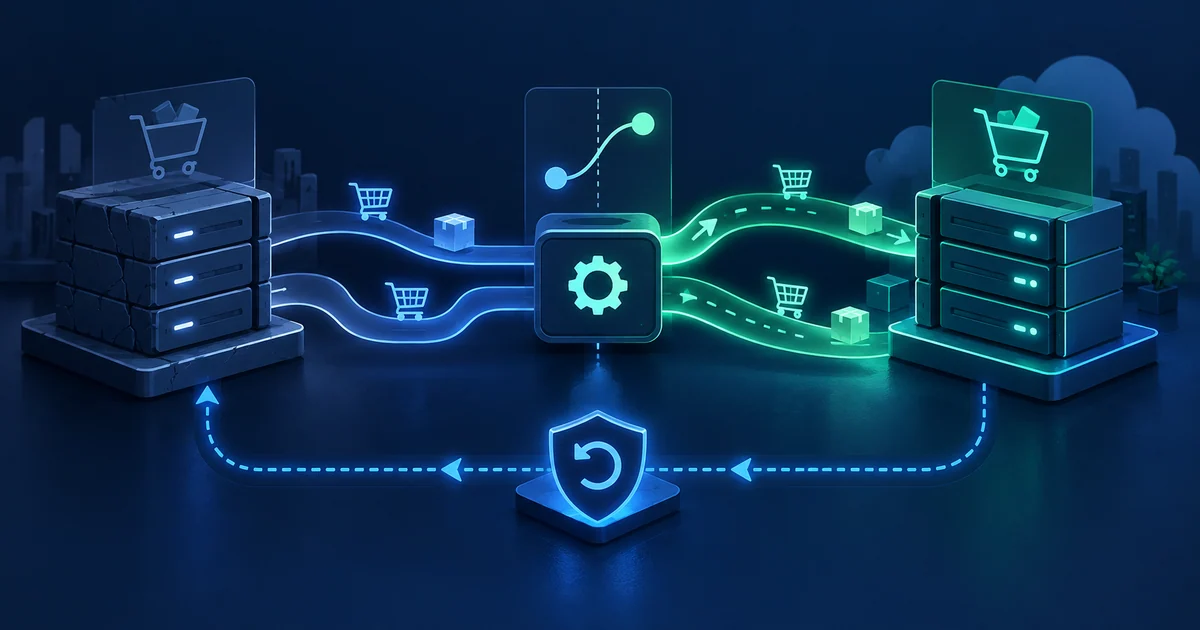
Expand/contract, traffic shifting and rollback. The subject matters because engineering decisions rarely fail through lack of tools alone. They fail when outcomes, constraints, evidence and ownership are left implicit.
This guide offers a practical way to discuss the problem with engineers, product partners and business stakeholders. Adapt the depth to the risk of the decision: a reversible experiment needs less ceremony than a migration, payment change or production AI capability.
Begin with the outcome
Write down the user or operational problem in one sentence. Add the current baseline, the desired change and the boundary of the work. Avoid defining success as installing a tool or completing a project; success should describe an observable improvement in the real workflow.
Ask three questions before implementation:
- Who experiences the problem and how often?
- What evidence would show that the change helped?
- What is the cost of being wrong or unavailable?
A practical review framework
Expand/contract
Start by defining what expand/contract means in the context of the system, team and business outcome. Record the assumptions, constraints and people affected before selecting a solution. For zero-downtime migration patterns for ecommerce apis, a useful decision should explain not only the preferred path, but also what was rejected and why.
Turn the decision into something observable. Identify the signal that would show progress, the failure mode that would trigger intervention and the person who owns the response. This keeps the framework connected to delivery rather than leaving it as a presentation exercise.
Traffic shifting
Start by defining what traffic shifting means in the context of the system, team and business outcome. Record the assumptions, constraints and people affected before selecting a solution. For zero-downtime migration patterns for ecommerce apis, a useful decision should explain not only the preferred path, but also what was rejected and why.
Turn the decision into something observable. Identify the signal that would show progress, the failure mode that would trigger intervention and the person who owns the response. This keeps the framework connected to delivery rather than leaving it as a presentation exercise.
Rollback
Start by defining what rollback means in the context of the system, team and business outcome. Record the assumptions, constraints and people affected before selecting a solution. For zero-downtime migration patterns for ecommerce apis, a useful decision should explain not only the preferred path, but also what was rejected and why.
Turn the decision into something observable. Identify the signal that would show progress, the failure mode that would trigger intervention and the person who owns the response. This keeps the framework connected to delivery rather than leaving it as a presentation exercise.
Common failure modes
Teams often jump from a plausible idea to implementation without agreeing on the decision criteria. Another common mistake is to test only the happy path while treating security, recovery and operations as work for later. Finally, ownership becomes unclear after launch: the project has finished, but the service still needs monitoring, support and improvement.
Counter these problems with a written decision, a small representative test set, explicit release criteria and a named operational owner. Prefer a limited rollout when uncertainty is high. Make rollback or safe degradation part of the design rather than an emergency improvisation.
Questions to take into the next review
- Is the intended outcome understandable without referring to a particular technology?
- Which constraint is most likely to invalidate the current approach?
- What evidence supports the decision, and what evidence is still missing?
- How will the system behave when a dependency or assumption fails?
- Who can stop, roll back or revise the change after release?
A strong engineering approach makes trade-offs visible. It does not promise certainty; it creates a controlled way to learn, release and operate while protecting users and the business.